Every workplace has hazards, whether it’s a construction site in Lahore or a warehouse in Karachi. General safety equipment is what stands between a worker and an avoidable injury. This guide walks through what it is, why it matters, and how businesses across Pakistan can choose the right gear for their teams.
What Is General Safety Equipment?
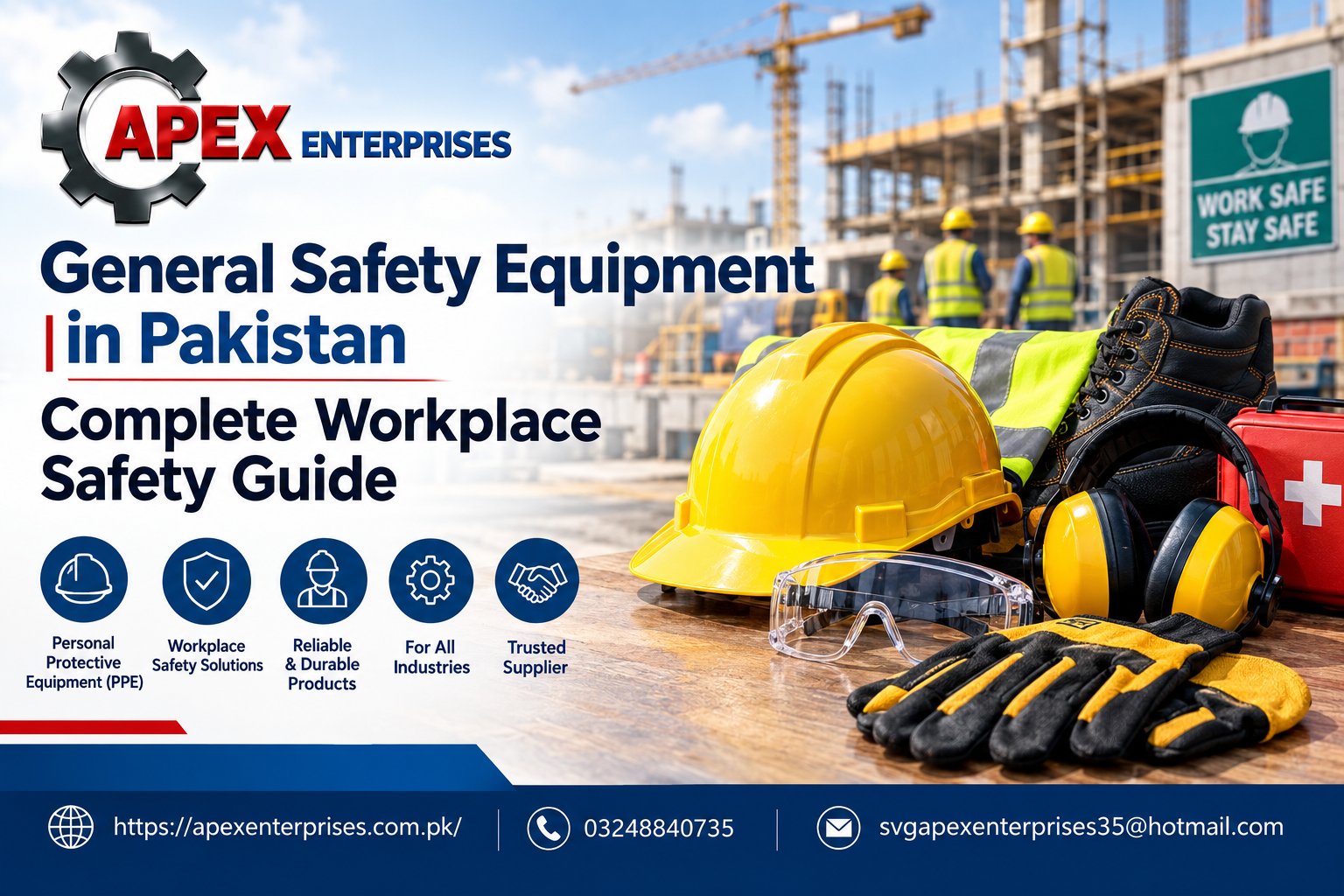
General safety equipment covers the everyday protective gear used across most industries items like helmets, gloves, safety shoes, and eye protection. It’s different from specialized industrial equipment, which is built for specific processes like welding or chemical handling. General safety equipment, by contrast, protects against common risks that show up in almost any work environment: falling objects, slips, cuts, and exposure to dust or noise.
For businesses buying workplace safety equipment for the first time, this category is usually the starting point. It’s the baseline every site needs before adding task-specific protective equipment. Good safety products don’t just tick a compliance box they reduce downtime, lower injury costs, and keep teams working without interruption.
Why Is General Safety Equipment Important for Workplaces?
Safety equipment exists because accidents rarely announce themselves. A loose bolt, a wet floor, an unmarked hazard these things happen fast, and the right gear is often the only thing standing between a close call and a serious injury.
Protecting Workers From Common Hazards
Most workplace injuries come from a short list of repeat offenders: falling objects, sharp edges, slippery surfaces, and airborne particles. Worker protection equipment addresses these directly. A hard hat prevents head trauma from falling tools. Gloves prevent lacerations. None of this is complicated, it’s about matching the right gear to the hazard in front of you, which is the core idea behind accident prevention and occupational safety.
Supporting a Safer Work Environment
Beyond individual protection, safety equipment shapes how a workplace functions day to day. When employee protection is built into daily procedures not treated as an afterthought workers move with more confidence and fewer interruptions. Workplace safety products also signal to staff that their employer takes safety procedures seriously, which tends to improve morale and reduce turnover.
Types of General Safety Equipment
This is the core of what most buyers are looking for, a breakdown of the equipment categories that make up a complete safety kit.
Head Protection Equipment
Safety helmets and hard hats protect against falling debris, low clearances, and impact injuries. Industrial helmets come in different classes depending on the electrical or impact hazards present on site, so it’s worth checking the specific rating before bulk ordering.
Eye and Face Protection
Safety goggles and safety glasses guard against dust, flying particles, and chemical splashes. Face shields add a layer of protection for tasks involving grinding, cutting, or exposure to larger debris. Even a minor eye injury can sideline a worker for days, which makes this one of the most cost-effective categories to invest in.
Hand Protection Equipment
Safety gloves are probably the most-used item on any list of workplace safety equipment. Cut-resistant gloves handle sharp materials, while chemical-resistant gloves protect against solvents and industrial fluids. The right protective gloves depend entirely on the task a warehouse worker and a lab technician need very different hand protection.
Foot Protection Equipment
Safety shoes and steel-toe boots protect against crush injuries, punctures, and falling objects. Anti-slip footwear matters just as much, particularly in environments with wet or oily floors. Industrial safety boots that combine both features are usually the better long-term purchase.
Hearing Protection Equipment
Earplugs and earmuffs reduce exposure to prolonged loud noise, which is common in manufacturing and construction. Hearing protection often gets skipped because the damage isn’t immediately visible, but repeated exposure adds up over months and years.
Respiratory Protection Equipment
Dust masks handle low-level particulate exposure, while respirators are needed for finer dust, fumes, or chemical vapors. Choosing the right respiratory protective equipment depends on what’s actually in the air, a construction site and a paint booth need different levels of filtration.
High-Visibility and Protective Clothing
Safety vests and reflective clothing keep workers visible in low light or high-traffic zones like warehouses and roadways. Coveralls and other protective workwear add a barrier against dust, chemicals, and general wear, extending the life of a worker’s regular clothing too.
Fall Protection Equipment
Safety harnesses, lanyards, and anchor points make up a fall arrest system essential for any work done at height, from scaffolding to rooftop maintenance. This is one category where cutting corners isn’t an option; a properly rated fall protection system is non-negotiable on elevated worksites.
Other Essential Workplace Safety Equipment
Beyond personal protective gear, a complete safety setup includes equipment for emergencies, hazard communication, and containment.
First Aid and Emergency Equipment
Every workplace needs first aid kits stocked and accessible, along with emergency supplies like eye wash stations for sites handling chemicals or fine particulates. Response time matters here, equipment that’s hard to find in a hurry defeats the purpose.
Fire Safety Equipment
Fire extinguishers, fire blankets, and clearly posted fire safety signs are standard requirements across almost every commercial and industrial site. This emergency equipment needs regular inspection, not just a one-time purchase.
Safety Signs and Workplace Markings
Warning signs, mandatory signs, and hazard signs communicate risk without relying on verbal instruction, which matters on sites with rotating staff or contractors. Clear safety signage reduces the chance of someone wandering into a hazard they didn’t know was there.
Spill Control and Chemical Safety Equipment
Spill kits and absorbent materials contain leaks before they spread, while dedicated chemical protection equipment limits exposure during handling. This hazard control equipment is especially important for sites storing fuel, solvents, or industrial cleaning agents.
General Safety Equipment in Pakistan
Demand for general safety equipment in Pakistan has grown alongside the expansion of construction, manufacturing, and logistics sectors. Businesses in Lahore, Islamabad, Karachi, Faisalabad and other industrial cities may require different combinations of PPE and workplace safety equipment depending on their operations and workplace hazards.
Safety Equipment Requirements Across Major Pakistani Cities
A textile factory in Faisalabad has different needs than a logistics hub in Rawalpindi or a construction firm in Multan. Cities like Gujranwala, with its dense manufacturing base, tend to prioritize hand and eye protection, while road and transport-heavy areas lean more on high-visibility clothing and fall protection. Sourcing a PPE supplier in Pakistan that understands these regional differences makes procurement far simpler than buying generic, one size fits all kits.
General Safety Equipment for Different Industries
Construction Industry
Construction safety equipment typically centers on safety helmets, high visibility vests, and fall protection, given the risks of working at height and around heavy machinery. PPE requirements also shift depending on the project phase, excavation, framing, and finishing each carry different hazard profiles.
Manufacturing and Factory Workplaces
Factory safety equipment usually focuses on protective gloves and industrial safety products suited to machinery operation. Manufacturing PPE also needs to account for repetitive tasks, where consistent, comfortable gear matters as much as protection level.
Oil and Gas Industry
This sector demands a higher tier of protection chemical protective equipment, fire safety equipment, and respiratory protection are standard given the flammability and toxicity risks involved. Oil and gas safety equipment is typically rated to stricter standards than general industrial gear.
Warehouses and Logistics
Warehouse safety equipment centers on safety footwear and high visibility clothing, given the mix of foot traffic, forklifts, and stacked inventory. Workplace protection in this sector often comes down to visibility and quick identification of hazards on busy floors.
How to Choose the Right General Safety Equipment
Identify Workplace Hazards
Start with an honest hazard assessment. Walk the site, talk to workers, and note what actually causes near-misses, not just what’s theoretically possible.
Choose Equipment for the Specific Task
Generic PPE covers the basics, but task-specific gear closes the gaps. A welder and a warehouse picker shouldn’t be issued identical kits.
Check Quality and Relevant Standards
Look for equipment that meets recognized safety standards for the hazard it’s rated against. Cheaper, unrated gear often fails exactly when it’s needed most.
Consider Comfort, Fit and Durability
Equipment that’s uncomfortable gets left in a locker. Fit and durability directly affect whether workers actually wear their gear consistently.
Plan for Regular Replacement and Bulk Supply
Safety equipment wears out faster than most people expect. Building a replacement schedule and sourcing in bulk keeps a site from running short when it matters.
Why Choose a Reliable Safety Equipment Supplier in Pakistan?
Sourcing safety equipment isn’t just about finding the lowest price. A dependable safety equipment supplier in Pakistan should offer consistent product availability, verified quality, and support for bulk orders across multiple safety categories. For businesses managing several sites, working with one supplier for general safety equipment supplier needs rather than juggling several vendors simplifies procurement and keeps stock levels predictable. Reliable delivery and responsive procurement support also matter more than most buyers realize until a shipment is delayed mid-project.
General Safety Equipment for Businesses in Islamabad
Islamabad’s mix of offices, construction projects, workshops, warehouses, and industrial businesses each come with distinct PPE requirements. An office environment might only need basic first aid and fire safety provisions. An active construction project, on the other hand, needs the full range helmets, harnesses, high-visibility clothing, and more. Businesses looking for general safety equipment in Islamabad benefit from suppliers who can scope requirements by site type. This avoids applying a blanket order across every location. Workplace safety equipment in Islamabad continues to see steady demand as more industrial and commercial projects move into the capital region.
How Apex Enterprises Can Help With Safety Equipment Procurement
Wide Range of Safety Products
Apex Enterprises supplies a broad catalog of general safety equipment, covering head, eye, hand, foot, and respiratory protection alongside fire safety and first aid supplies.
Bulk Supply for Businesses
For companies managing larger teams or multiple sites, Apex supports bulk ordering so procurement doesn’t need to happen in small, repeated batches.
Support for Different Industries
From construction to manufacturing, Apex works with businesses across sectors to match equipment to actual site hazards rather than offering a single generic package.
Delivery Across Pakistan
Apex Enterprises serves businesses across Pakistan’s major industrial and commercial centers. This makes it easier for teams outside Lahore to source safety equipment without long lead times.
Frequently Asked Questions About General Safety Equipment
What is general safety equipment?
It’s the category of protective gear used across most workplaces to guard against common hazards things like helmets, gloves, safety shoes, and eye protection. This is different from equipment built for one specific industrial process.
What are the most common workplace safety products?
Safety helmets, gloves, safety shoes, eye protection, and high-visibility clothing are used across nearly every industry. That makes them the most commonly stocked workplace safety products.
What PPE is commonly used in industrial workplaces?
Industrial sites typically rely on hard hats, protective gloves, safety goggles, respiratory protection, and steel-toe boots. Additional gear gets layered in based on specific hazards.
Where can businesses buy general safety equipment in Pakistan?
Businesses can source general safety equipment through established suppliers like Apex Enterprises. Apex provides a range of PPE and safety products for companies across Pakistan.
Can safety equipment be supplied in bulk?
Yes. Most suppliers, including Apex Enterprises, offer bulk supply options for businesses that need to equip larger teams or multiple work sites at once.
What safety equipment is commonly required in construction?
Construction sites generally require safety helmets, high-visibility vests, fall protection systems, and safety footwear. Additional gear gets added depending on the specific tasks involved.
Final Thoughts on General Safety Equipment
General safety equipment isn’t optional overhead, it’s what keeps a workplace running without preventable setbacks. The right combination of gear depends on the hazards specific to each site. But the fundamentals stay consistent quality, proper fit, and durability matter more than price alone. Businesses across Pakistan, from Lahore to Islamabad and beyond, have steady access to the PPE and workplace safety equipment they need. For companies ready to equip their teams properly, Apex Enterprises offers a reliable starting point for sourcing quality safety equipment in bulk, across industries, and across the country.