Textile Shade Marking: Importance and Benefits for Textile Production
Textile shade marking is the simple but critical step of labelling fabric rolls, cut pieces and bundles so every lot can be identified at a glance. When shades are unmarked or marked inconsistently, mix-ups happen at the cutting table, and a whole batch can end up with visible color variation. A handheld numbering labeller, also known as a textile numbering machine or numbering gun, solves this by printing clean, sequential numbers on small adhesive labels. This guide from Apex Enterprises explains how it works, where it fits in a garment unit, and what to check before you buy one.
Textile Shade Marking: Why Does It Matter?
Fabric from different dye lots can look almost identical on the roll but show a clear difference once the garments are stitched. Shade marking links every roll, cut piece or bundle to its lot number, so pieces from the same lot stay together through cutting, stitching and finishing.
Good shade identification helps a production unit:
- Keep matching shades together in the same garment
- Trace a quality issue back to the exact lot or bundle
- Reduce rework, rejections and wasted fabric
- Keep the cutting table and bundling area organized
How a Numbering Labeller Supports Textile Shade Marking
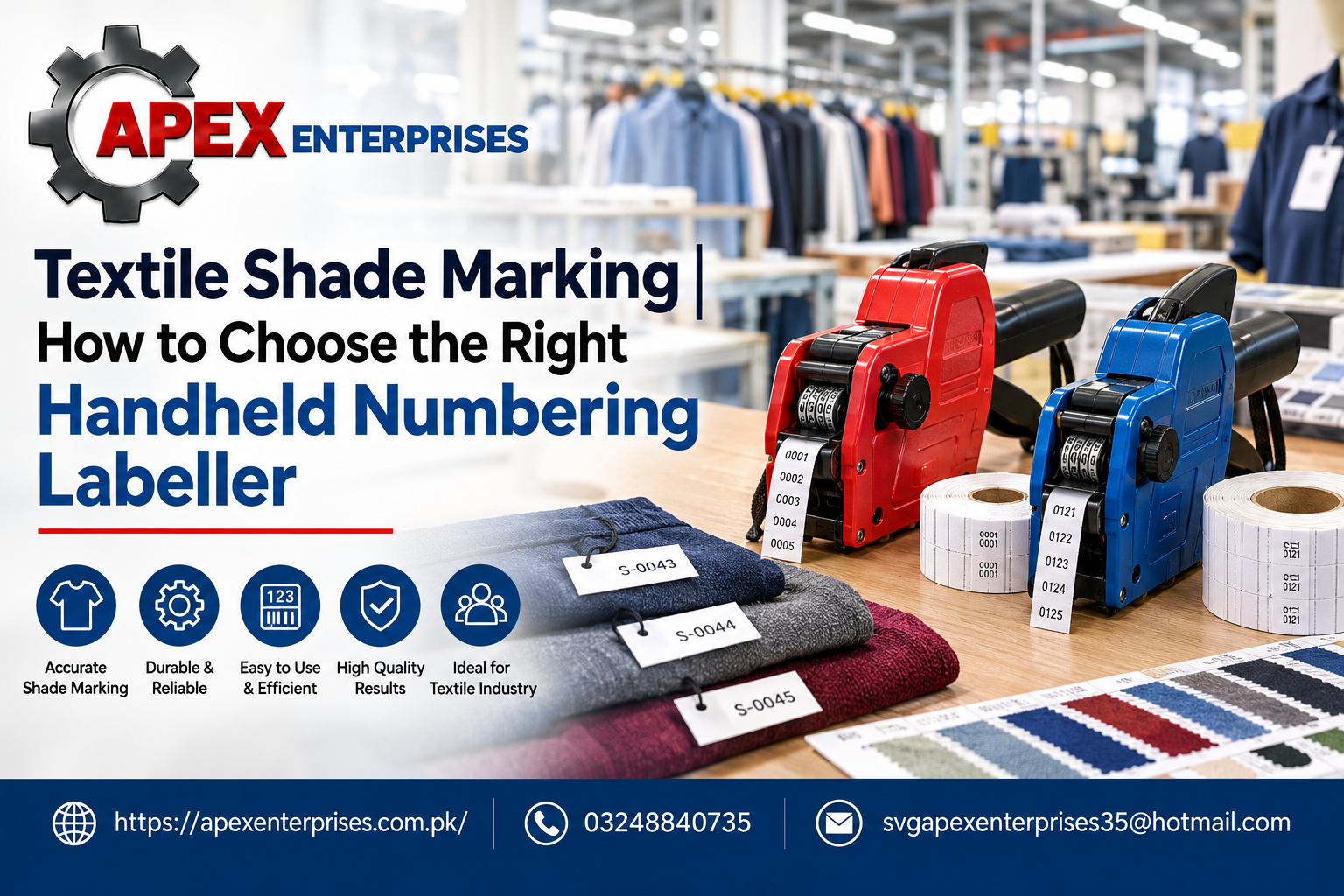
A handheld numbering labeller is a manual tool that prints a number onto a small adhesive label with each press. There is no power connection or software involved. You load the label roll, set the starting number and press the handle.
Most models offer two numbering modes:
- Consecutive numbering: the number advances automatically with every press (1, 2, 3 and so on), which suits bundle and piece numbering.
- Repeated numbering: the same number prints again and again, which suits marking every piece from one shade lot with the same code.
The printed label is then peeled and stuck onto the fabric, ticket or bundle.
Textile Shade Marking and Other Applications of Numbering Labellers
A fabric numbering machine of this type, sometimes called a textile tagging machine, is useful wherever items need a quick, readable identification number:
- Shade identification: marking rolls and cut panels by dye lot
- Garment bundle numbering: keeping cut pieces in the correct sequence
- Cut piece tracking: matching front, back and sleeve panels of the same garment
- Stock identification: labelling fabric, trims and finished goods in the warehouse
- Price and batch marking: numbering items for sale or dispatch
Handheld Labeller vs Marker Pens vs Manual Tags
| Method | Speed | Consistency | Traceability | Best for |
| Handheld numbering labeller | Fast, one press per label | High, uniform printed numbers | Easy to follow in sequence | Regular shade and bundle marking |
| Marker pens | Slow for large volumes | Depends on handwriting, can smudge | Harder to read and verify | Occasional, small jobs |
| Manual paper tags | Slow, each tag written by hand | Varies from person to person | Tags can fall off or get mixed | Temporary, low-volume marking |
What to Check Before Buying a Fabric Numbering Machine
Not every labeller suits every workflow. Check these points before you order:
- Number of digits: make sure the digit count covers your highest lot or bundle number. An 8-digit labeller gives plenty of room for most garment units.
- Label size and type: confirm which label size the machine takes and whether the labels are easy to source locally.
- Numbering modes: you will usually want both consecutive and repeated numbering.
- Adhesion on your fabric: labels behave differently on cotton, synthetics and blends. Test a few labels on your own fabric and check that they stay in place and peel off cleanly.
- Consumables: ask about labels and ink availability, since you will need them regularly.
- Supplier support: choose a reliable supplier, such as Apex Enterprises, who can help with enquiries, bulk quantities and replacement consumables.
If you are comparing options, you can browse the machine category at Apex Enterprises.
How to Use a Numbering Labeller: Step by Step
- Load the label roll as shown in the machine instructions.
- Set the starting number as shown in the machine instructions.
- Choose consecutive or repeated numbering, depending on the job.
- Press the handle to print the first label and check that the number is clear.
- Peel the label and stick it on the fabric, ticket or bundle.
- Keep a simple record of which number range belongs to which lot.
Common Mistakes to Avoid
- Buying a labeller without checking label size and availability
- Skipping the adhesion test on the actual fabric
- Applying labels to damp or dusty surfaces
- Mixing number ranges between lots without recording them
- Running out of spare labels in the middle of a production run
Example: BLITZ 2253 Handheld Numbering Labeller
The BLITZ 2253 handheld numbering labeller is one example of this type of tool. It is a manual, 8-digit handheld labeller designed for 22 × 12 mm wavy-edged labels, with both consecutive and repeated numbering. That makes it suitable for shade marking, bundle numbering and stock identification. Apex Enterprises supplies it in Pakistan; check the product page for current details before you enquire.
Frequently Asked Questions
Q1. What is textile shade marking?
It is the practice of labelling fabric rolls, cut pieces or bundles with a lot or shade number so matching pieces can be kept together and traced later.
Q2. What is the difference between consecutive and repeated numbering?
Consecutive numbering increases the number automatically with each press, while repeated numbering prints the same number multiple times.
Q3. Can a numbering labeller be used on fabric?
Yes, it is commonly used for textile marking. Labels are stuck on, so always test adhesion and removal on your specific fabric before bulk use.
Q4. How many digits do I need on a numbering labeller?
Choose enough digits to cover your highest lot, bundle or stock number. An 8-digit labeller is enough for most garment and warehouse requirements.
Q5. Is a handheld labeller better than marker pens for shade identification?
For regular production it is usually more consistent and easier to read than handwriting, and it keeps numbers in sequence.
Q6. Where can I buy a handheld numbering labeller in Pakistan?
Apex Enterprises, a Lahore-based supplier, handles enquiries, availability checks and bulk quotations for handheld numbering labellers. You can contact the team through the website or WhatsApp.
Conclusion: Choose the Right Textile Numbering Labeller
Effective textile shade marking helps garment manufacturers keep fabric lots organised, identify bundles accurately and reduce mix-ups during production. Choosing the right handheld numbering labeller depends on your numbering requirements, label compatibility and daily workflow. The BLITZ 2253 Handheld Numbering Labeller offers 8-digit numbering with consecutive and repeated numbering options for textile identification and stock marking. If you are looking for a suitable numbering solution, explore the BLITZ 2253 Textile Numbering Machine from Apex Enterprises and contact the team for product details, availability and quotations.