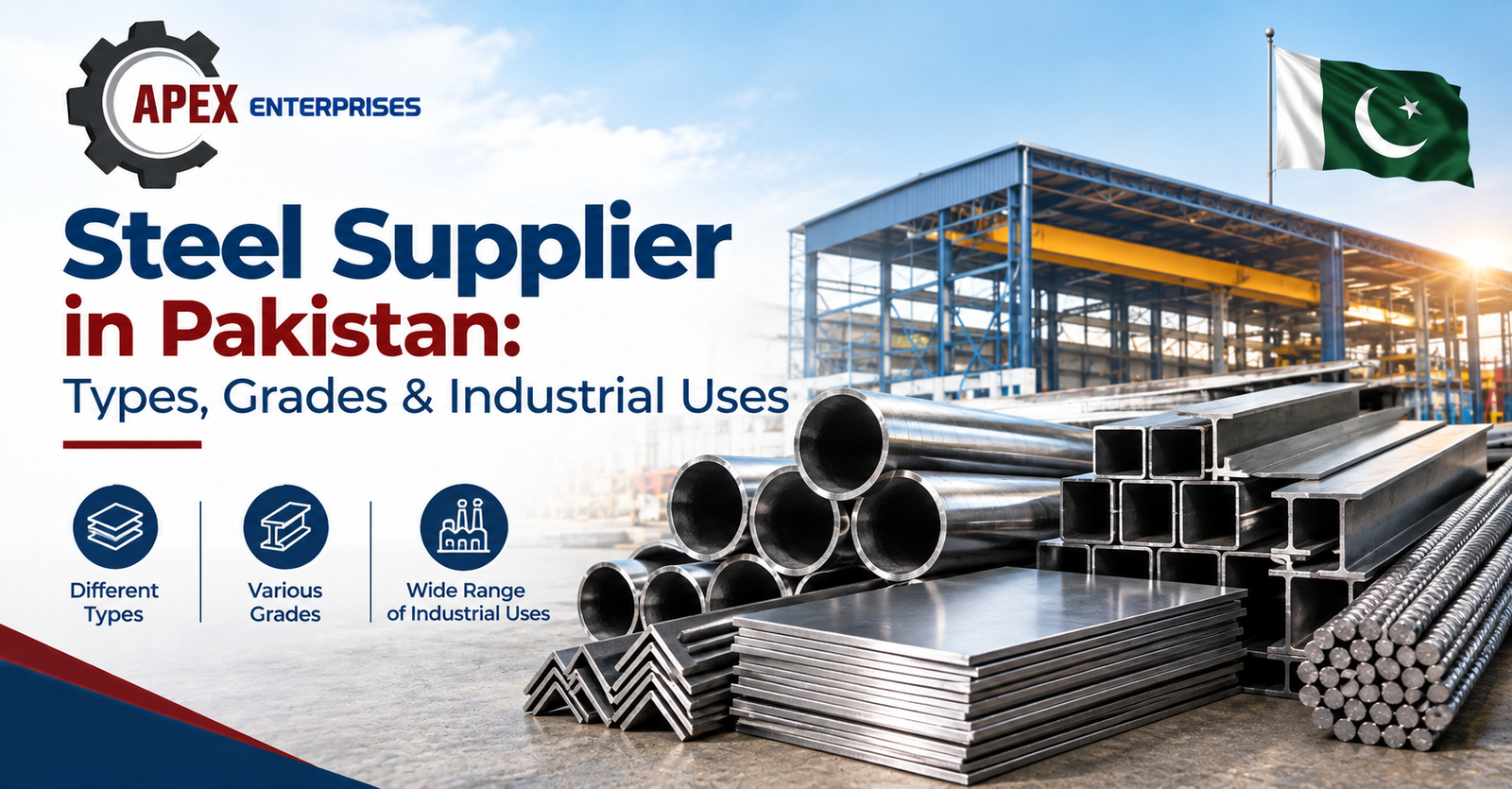
Pakistan’s construction, manufacturing, and engineering industries simply cannot function without steel. Whether it’s building a home, setting up a factory, or manufacturing heavy machinery, steel remains a fundamental requirement across every sector. This is exactly why the demand for steel continues to grow rapidly in Pakistan every year, and businesses and individuals alike are constantly searching for a reliable steel supplier in Pakistan who can provide quality material, fair pricing, and timely delivery.
In this blog, we’ll take a detailed look at the different types of steel, their grades, industrial applications, and how to choose the right supplier for your needs.
What Is Steel and Why Does It Matter So Much?
Steel is an alloy made by combining iron and carbon in varying proportions. Its strength, durability, and versatility make it indispensable across industries — from construction to automotive manufacturing. Pakistan has both local steel manufacturing and imported steel supply chains, but quality and consistency depend heavily on choosing a trustworthy supplier.
Major Types of Steel
A good steel supplier company typically offers a range of steel types to meet different project needs. Some of the most common types include:
1. Mild Steel (MS)
Mild steel is the most common and affordable type of steel. Its low carbon content makes it easy to weld and shape, which is why it’s widely used in construction, pipes, and structural frameworks.
2. Stainless Steel
Stainless steel is known for its corrosion-resistant properties. It’s commonly used in kitchen equipment, medical tools, and the food processing industry. If you’re searching for a stainless steel supplier in Pakistan, always verify quality certifications before purchasing.
3. Carbon Steel
Carbon steel contains a higher carbon content than mild steel, making it harder and stronger. It’s often used to manufacture machinery parts and cutting tools.
4. Alloy Steel
Alloy steel is created by adding elements like manganese, nickel, or chromium to improve strength and resistance. It’s commonly used in heavy industries and the automobile sector.
5. Tool Steel
Tool steel is extremely hard and heat-resistant, making it ideal for manufacturing cutting and drilling tools.
Understanding Steel Grades
The right steel grade depends entirely on the nature of your project. In Pakistan, the following grades are commonly used:
- Grade 60 – The standard grade for construction and reinforcement bars
- Grade 40 – Used for lighter construction and residential projects
- 304 Stainless Steel – General-purpose use, ideal for kitchen and industrial equipment
- 316 Stainless Steel – Offers high corrosion resistance, suited for marine and chemical industries
Choosing the correct grade is essential for structural safety and long-term durability. So whenever you compare steel bars price in Pakistan, don’t just look at the price — check the grade certification too.
Industrial Uses of Steel
Steel’s use isn’t limited to construction alone. It serves as a core material across multiple industries:
- Construction Industry – Used for reinforcement bars, beams, and columns in buildings, bridges, and infrastructure projects
- Automobile Industry – Used in manufacturing car bodies, chassis, and engine parts
- Oil & Gas Sector – Used to build pipelines and storage tanks
- Manufacturing Units – Used in producing machinery, tools, and equipment
- Furniture Industry – Used for modern steel furniture and fittings
- Agriculture Sector – Used for farming equipment and storage structures
This wide range of applications is exactly why the demand for industrial steel suppliers keeps growing across Pakistan.
How to Choose the Right Steel Supplier
When selecting a reliable steel supplier in Pakistan, keep the following factors in mind:
- Quality Certification – Ensure the material meets ISO or relevant industry standards
- Product Range – Choose a supplier that offers multiple steel types and grades
- Pricing Transparency – Look for fair, market-competitive rates
- Delivery Timeline – Confirm on-time delivery and reliable logistics
- Customer Support – Good suppliers offer technical guidance and after-sales support
If you’d like a detailed guide on selecting quality construction materials, check out our blog [Best Construction Materials in Pakistan], where we share tips for choosing the right materials for your project.
Factors That Affect Steel Prices
Steel prices in Pakistan fluctuate on a regular basis. Some of the major factors that influence pricing include:
- International raw material rates
- Dollar exchange rate
- Local demand and supply
- Government taxes and import duties
- Transportation and logistics costs
If you want to stay updated on current rates, check out our blog [Steel Prices in Pakistan – Latest Updates], where we share monthly price trends.
Local vs. Imported Steel: Which Is Better?
Pakistan’s market offers both local and imported steel. Local steel is generally more affordable and comes with shorter delivery times, while imported steel is often considered more consistent in quality, particularly for high-grade industrial projects. Your choice ultimately depends on your project’s specific requirements and budget.
Apex Enterprises is one of Pakistan’s leading steel supplier companies, offering a wide range of mild steel, stainless steel, and alloy steel to meet diverse project needs. We guarantee our clients quality-certified material, competitive pricing, and on-time delivery — whether the project is residential or large-scale industrial. If you’re looking for a trusted and reliable steel supplier in Pakistan, get in touch with Apex Enterprises today and share your requirements.
Conclusion
Steel is the backbone of nearly every industry, and demand for it continues to rise across Pakistan. Choosing the right type, grade, and a trusted steel supplier in Pakistan directly impacts the quality and longevity of your project. Whether you’re working on a construction project or setting up an industrial unit, quality material paired with a reliable supplier is always the best investment you can make.
If you’re looking for a trusted supplier that guarantees quality steel, competitive pricing, and timely delivery, get in touch with us and share your requirements today.
Frequently Asked Questions (FAQs)
1. How do I choose the best steel supplier in Pakistan?
Look at quality certifications, product range, transparent pricing, and customer reviews before choosing a supplier.
2. Which steel grade is best for construction?
Grade 60 is the most commonly recommended grade for residential and commercial construction.
3. What’s the difference between stainless steel and mild steel?
Stainless steel is corrosion-resistant, while mild steel is more affordable and easier to weld but carries a higher risk of rusting.
4. What determines steel prices?
International raw material rates, the dollar exchange rate, and local demand-supply dynamics all directly affect steel prices.
5. Is imported steel better than local steel?
Imported steel tends to offer more consistent quality, but local steel is more affordable and readily available — the right choice depends on your project’s needs.
6. What type of steel is best for industrial projects?
Alloy steel and carbon steel are generally more suitable for heavy industrial machinery and equipment.